Gas cylinder safety knowledge
Infographics on cylinder colours, valves, selection, storage and safe handling of gas cylinders, with a text summary of the rules.
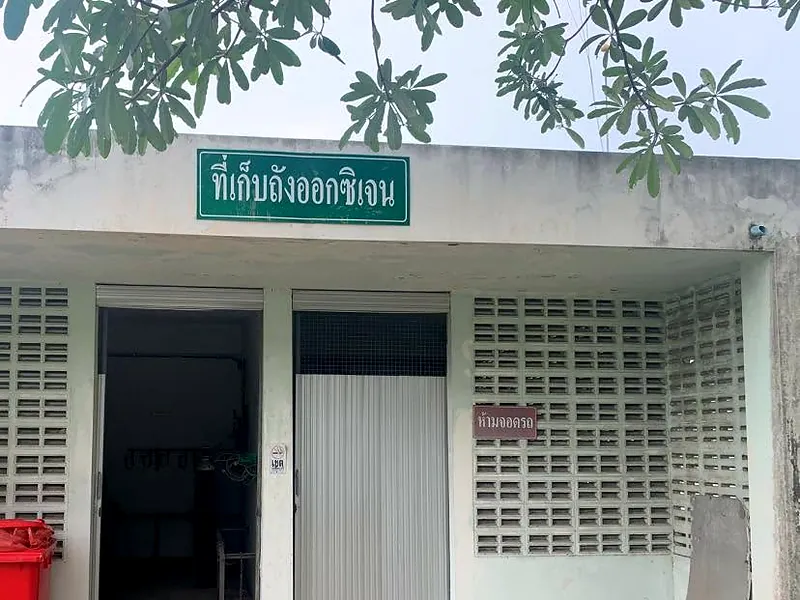
Real photos from our company
Safety infographics (click an image to enlarge)
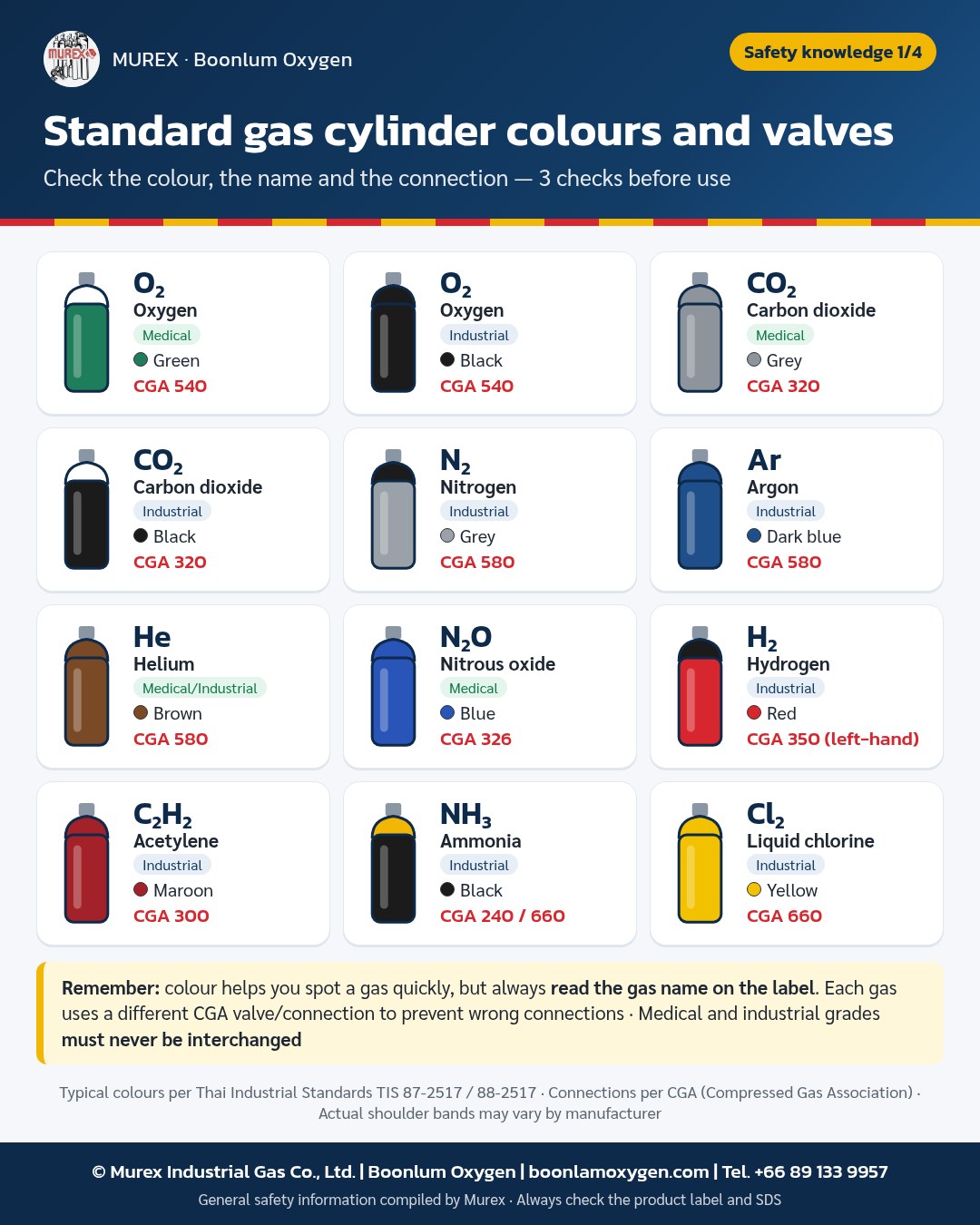
Standard gas cylinder colours and valves (TIS 87/88 and CGA)
Murex infographic: body colours of 12 gas cylinder types, medical vs industrial grade, with the CGA valve connection for each gas
© Murex Industrial Gas Co., Ltd. · General safety information compiled by Murex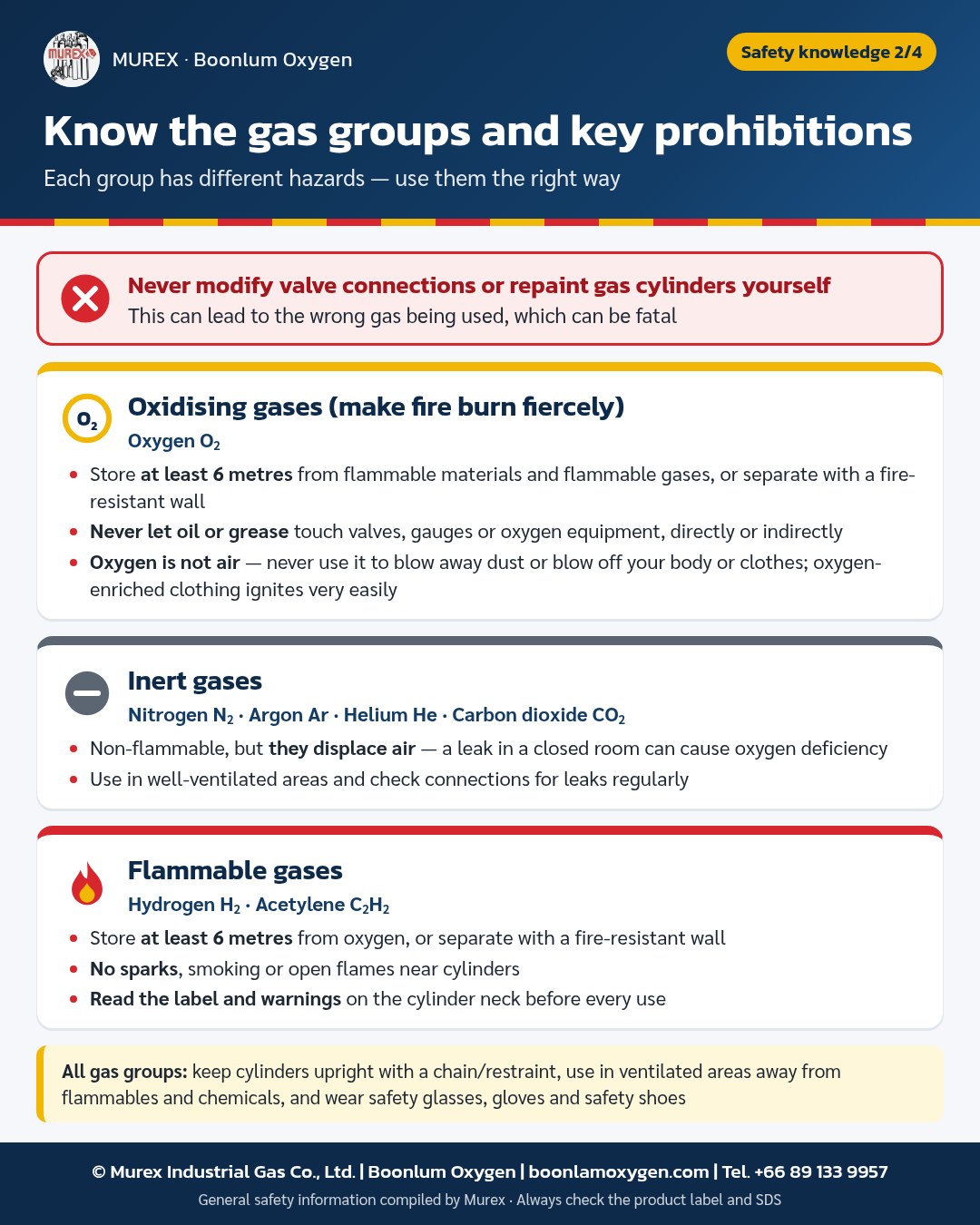
Know the gas groups and the key prohibitions
Murex infographic: oxidising, inert and flammable gases, and the key prohibitions for each group
© Murex Industrial Gas Co., Ltd. · General safety information compiled by Murex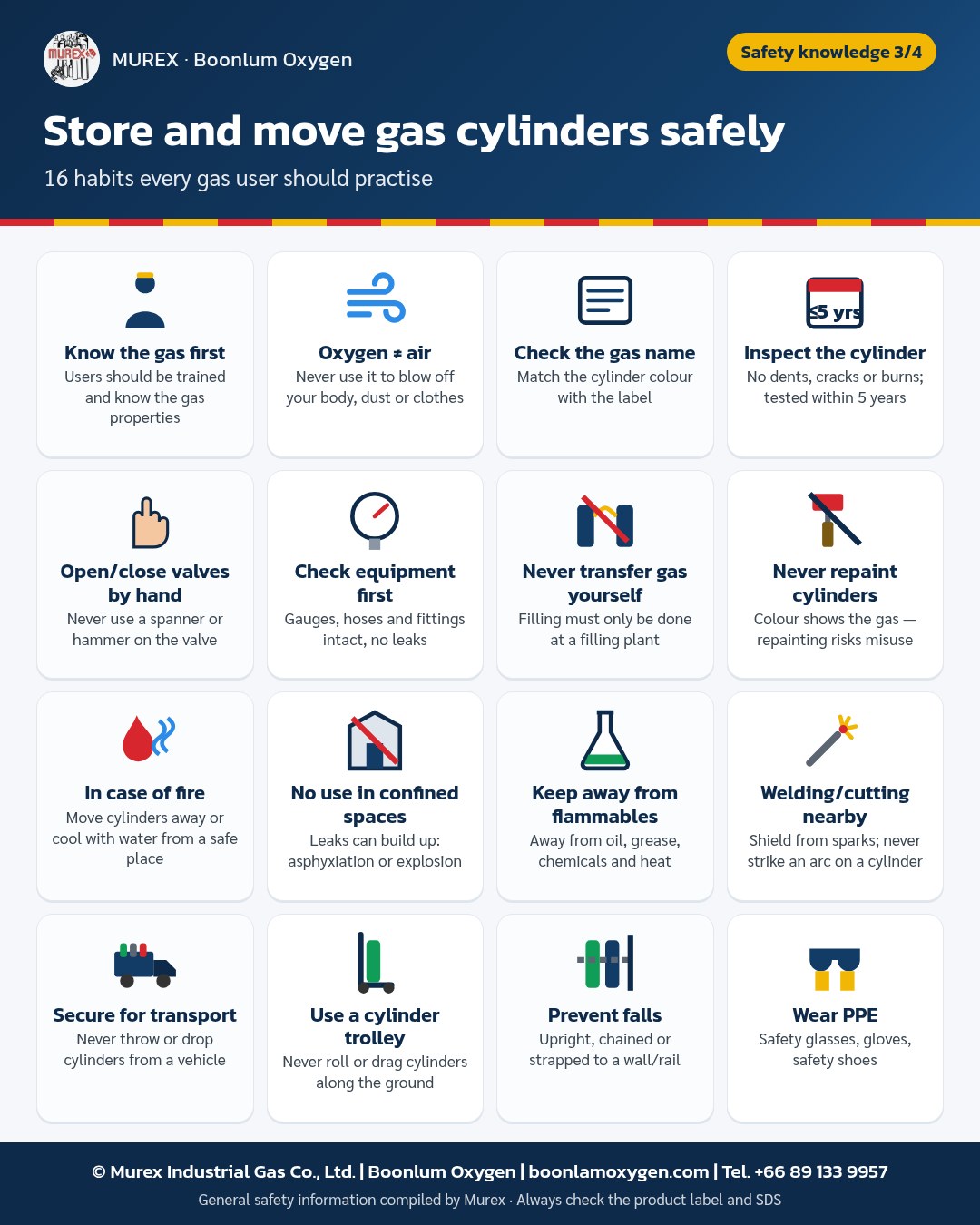
Store and move gas cylinders safely
Murex infographic: 16 rules for safely using, storing, transporting and moving gas cylinders
© Murex Industrial Gas Co., Ltd. · General safety information compiled by Murex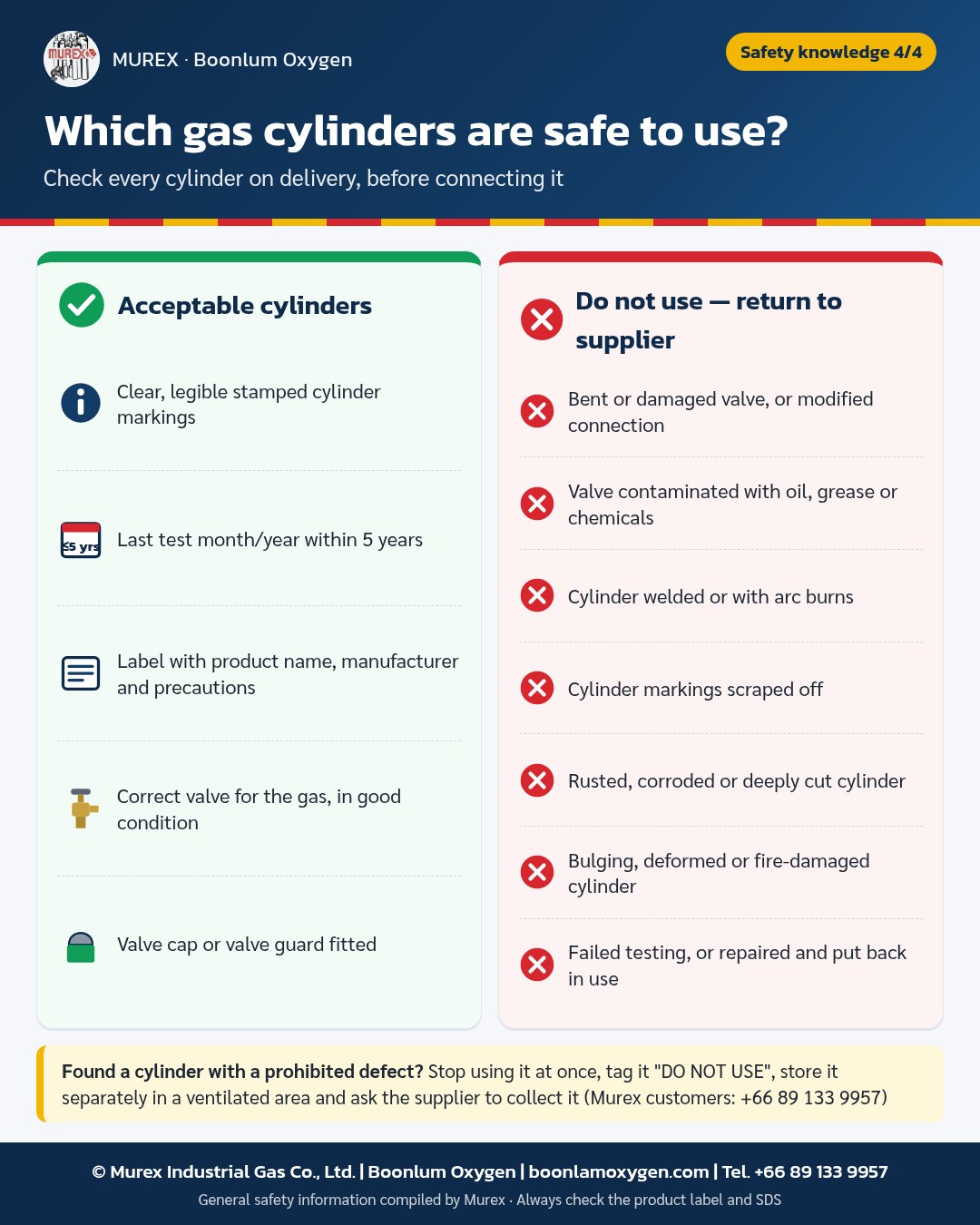
Which gas cylinders are safe to use?
Murex infographic: what an acceptable cylinder looks like, and cylinders that must not be used and must be returned to the supplier
© Murex Industrial Gas Co., Ltd. · General safety information compiled by MurexAll 4 infographics were designed and compiled by Murex Industrial Gas Co., Ltd. (Boonlum Oxygen) from general gas cylinder safety knowledge, cylinder colours to Thai Industrial Standards TIS 87-2517 / 88-2517 and valve connections to CGA specifications. Feel free to share them to spread the knowledge — please credit Murex. · boonlamoxygen.com
Text summary of the safety rules
A brief summary of the infographics above; see the enlarged images for full details.
1. Standard gas cylinder colours and valves (TIS 87/88 and CGA)
- The cylinder body colour and gas identification label show the gas type. Always use them together with the label — never identify a gas by colour alone.
- Each gas uses a different CGA standard valve and connection to prevent connecting the wrong gas, e.g. oxygen CGA 540, nitrogen CGA 580, CO₂ CGA 320, acetylene CGA 300.
- Oxygen and CO₂ come in both “medical” and “industrial” grades with different body colours — never use one in place of the other.
2. Know the gas groups and the key prohibitions
- Gases fall into 3 groups: oxidising gases that support combustion (oxygen), inert gases (nitrogen, argon, helium, CO₂) and flammable gases (hydrogen, acetylene).
- Never modify valve connections or repaint gas cylinders, as the wrong gas could be used, with potentially fatal results.
- Store oxygen at least 6 metres from flammable materials or flammable gases, or separate them with a fire-resistant wall.
- Never use oil or grease on oxygen equipment, and never use oxygen to blow away dust or clean clothing.
- Read the label information and warnings every time before using a gas. Never create sparks near flammable gases.
3. Store and move gas cylinders safely
- Gas users should be trained, check the colour and gas identification label before use, and inspect the cylinder exterior (the cylinder must have been tested within the last 5 years).
- Open and close valves by hand only — never use a spanner or hammer the valve. Check equipment before use, and never transfer gas between cylinders yourself.
- Never use cylinders in confined spaces, never store them near flammable materials or chemicals. In a fire, move cylinders away or cool them with water spray.
- Secure cylinders firmly during transport; never throw or drop cylinders from a vehicle. Move them with a trolley — never roll cylinders.
- Keep cylinders stable with a chain or restraint to stop them falling, and wear protective equipment (safety glasses, gloves, safety shoes).
4. Which gas cylinders are safe to use?
- A safe cylinder: clear cylinder markings; last test month/year within 5 years; a label giving product details, the manufacturer and precautions; a valve in good condition; and a valve cap or valve guard.
- Cylinders that should not be used: bent or damaged valve, valve contaminated with chemicals/oil, modified valve, cylinder that has been welded or arc-struck, cylinder markings removed.
- Do not use cylinders that are corroded, bulging, deformed, deeply cut, fire-damaged, or that have failed testing or been repaired and returned to use.